It started before my clinic even officially began.
An urgent new patient had somehow been placed in a follow-up slot – a scheduling mix-up that landed a full new patient visit where I had maybe half the time for one. By the time I realized what happened, I already had a waiting room filling up.
I felt all of it. Frustration. Anger at my scheduler. That particular kind of dread that comes when you can see exactly how the next eight hours are going to unravel.
And underneath all of that: the temptation.
Just leave the chart open. Come back to it. You’re already behind – one more minute isn’t going to matter.
I’ve made that choice before. We all have. It feels like the reasonable thing to do in the moment, like you’re being efficient, like you’re moving on.
But I’ve learned something about that choice, and I thought of it standing in the doorway of that exam room: leaving a chart open doesn’t just cost me time. It costs me presence.
That open chart would sit in the back of my mind like a tab that never fully closes. I wouldn’t be fully there for the next patient, or the one after that. Some detail from the visit would blur. The cognitive weight of “unfinished business” would follow me down the hall, into lunch, and if I wasn’t careful, all the way home.
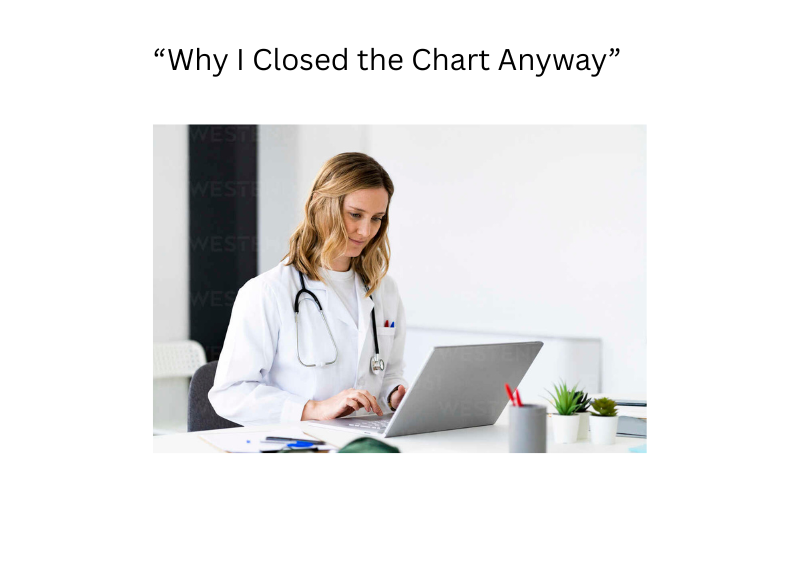
So I closed it.
It took a few extra minutes I didn’t have. I ran a little more behind. By lunch I had almost no time to eat.
But every chart from my morning was closed.
And there was a feeling of relief and pride in my committment to myself.
Here’s what I’ve come to understand about that kind of decision: it’s not really a time management decision. It’s a relationship decision – specifically, a decision about your relationship with your future self.
My future self, the one who would be sitting down that evening, didn’t need one more open chart waiting for her. She needed to be done. To close her laptop and actually be home.
When I’m thinking clearly – when what I call my Mentor Mind is running the day instead of the panicked, reactive version of me – I make decisions for her, not just for the me who’s stressed out at 8:45 in the morning.
That’s the shift. Not faster charting. Not better time management. Just asking, in the moment: what would the wiser version of me do right now?
Usually, she closes the chart.
If you’re a physician mom who wants to stop charting at night and get your evenings back, this is exactly what we work on in coaching. The decisions that shape your day happen in small moments like this one – and they’re learnable.